The Industrial Asset Hub Ecosystem
Industrial Asset Hub (IAH) extends the Siemens Industry digitalization portfolio with centralized services for the lifecycle management of industrial assets. By providing a robust, open infrastructure, IAH enables multiple parties and partners to seamlessly integrate and deliver added value to platform users.
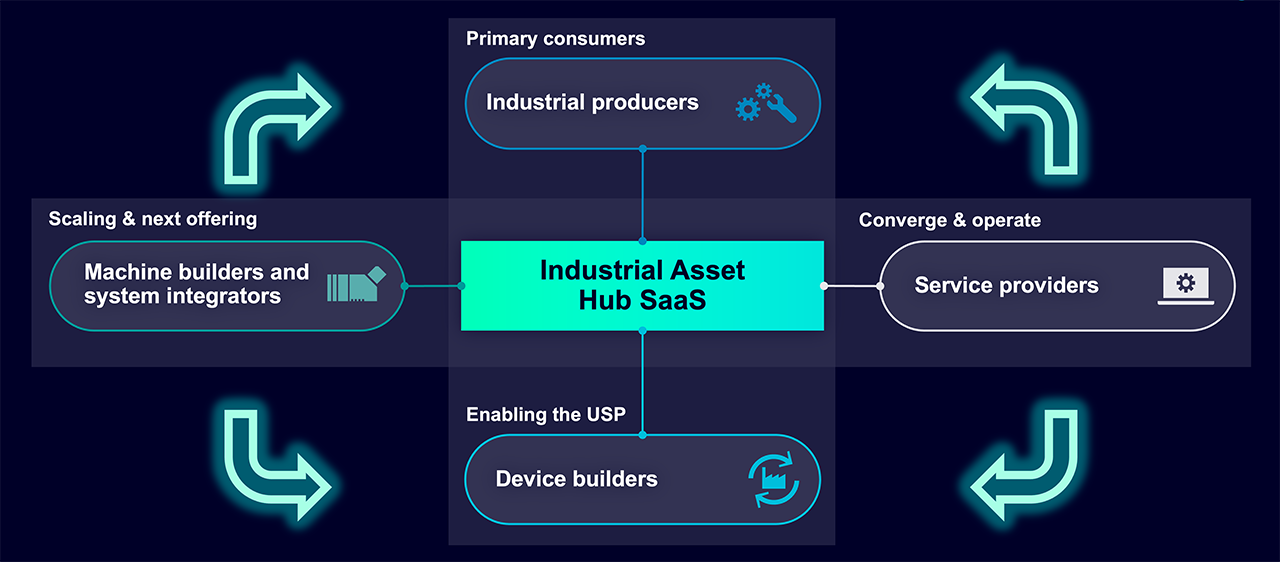
Figure: Industrial Asset Hub Ecosystem
How to participate
Ecosystem partners can participate in Industrial Asset Hub by taking on one or more of the following roles, depending on their specific use cases and business goals.
1. Device Builder
A Device Builder (or device provider) creates hardware and wants to offer additional value by making their devices discoverable and manageable within Industrial Asset Hub.
To integrate their devices, a Device Builder must either:
- Develop a specific Asset Link for their proprietary protocol.
- Integrate the Asset Gateway functionality directly into their devices.
Once completed, IAH customers can natively view and manage these new devices alongside their existing equipment from one common software interface.
Developer Resources for Device Builders: The SDK, comprehensive documentation, code examples, and open-source drivers are fully available on our GitHub repository.
- Visit GitHub: Industrial Asset Hub GitHub Repository
2. App Provider
An App Provider develops software solutions and wants to build applications, analytics, or services on top of the rich inventory information gathered by IAH.
By utilizing the extensive IAH API, App Providers can scale their offerings effortlessly. Because the API abstracts away the complexity of underlying hardware protocols, applications work independently of the specific device classes and vendors discovered on the factory floor.
Developer Resources for App Providers: To start building applications that consume IAH data, refer to our comprehensive API documentation in the Developer Guide.
- View API Docs: Programming Interface (API) Guide
3. Service Provider
A Service Provider is responsible for maintaining and servicing equipment across multiple manufacturing customers.
Service Providers can use IAH to harmonize their service efforts. Instead of using disconnected, vendor-specific tools for each client, they can rely on IAH to integrate asset information from different customers in a standardized way. This transparency reduces the complexity of diagnostics, accelerates troubleshooting, and lowers the overall cost of handling service requests.